
Gadgetcity- What Is The Difference Between Db and Dbi Frequencies?
Gadgetcity- What Is The Difference Between Db and Dbi Frequencies?
The differences between DB and DBI are as follows:
Many Parameters related to antennas are measured in
Db (decibels) for instance gain is often specified in Db's ( decibels) and is
written as 10dB. The Decibel system is used when quantities can vary by massive
amounts.
Antenna measurements
dBi
- dB(isotropic) – the forward gain of an antenna compared with the hypothetical isotropic antenna, which uniformly distributes energy in all directions. Linear polarization of the EM field is assumed unless noted otherwise.
dBd
- dB(dipole) – the forward gain of an antenna compared with a half-wave dipole antenna. 0 dBd = 2.15 dBi
- What is dBi?
- In electromagnetics, an antenna's power gain or simply gain is a key performance figure which combines the antenna's directivity and electrical efficiency. As a transmitting antenna, the figure describes how well the antenna converts input power into radio waves headed in a specified direction. As a receiving antenna, the figure describes how well the antenna converts radio waves arriving from a specified direction into electrical power. When no direction is specified, "gain" is understood to refer to the peak value of the gain. A plot of the gain as a function of direction is called the radiation pattern.Antenna gain is usually defined as the ratio of the power produced by the antenna from a far-field source on the antenna's beam axis to the power produced by a hypothetical lossless isotropic antenna, which is equally sensitive to signals from all directions. Usually this ratio is expressed in decibels, and these units are referred to as "decibels-isotropic" (dBi). An alternate definition compares the antenna to the power received by a lossless half-wave dipole antenna, in which case the units are written as dBd. Since a lossless dipole antenna has a gain of 2.15 dBi, the relation between these units is: gain in dBd = gain in dBi - 2.15 dB . For a given frequency the antenna'seffective area is proportional to the power gain. An antenna's effective length is proportional to the square root of the antenna's gain for a particular frequency and radiation resistance. Due to reciprocity, the gain of any antenna when receiving is equal to its gain when transmitting.Directive gain or directivity is a different measure which does not take an antenna's electrical efficiency into account. This term is sometimes more relevant in the case of a receiving antenna where one is concerned mainly with the ability of an antenna to receive signals from one direction while rejecting interfering signals coming from a different direction.
What is Decibel?
The decibel ( dB) is used to measure sound level, but it is also widely used in electronics, signals and communication. The dB is a logarithmic unit used to describe a ratio. The ratio may be power, sound pressure, voltage or intensity or several other things. Later on we relate dB to the phon and the sone

Loudness, phons and sones
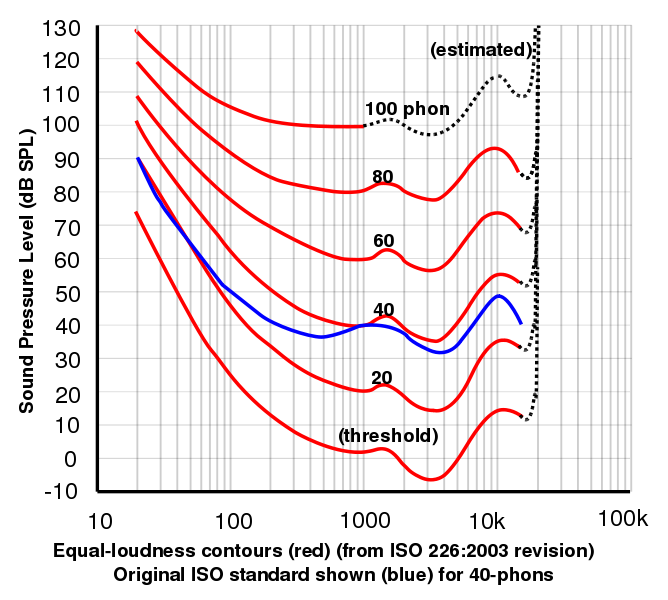
- The phon is a unit that is related to dB by the psychophysically measured frequency response of the ear. At 1 kHz, readings in phons and dB are, by definition, the same. For all other frequencies, the phon scale is determined by the results of experiments in which volunteers were asked to adjust the loudness of a signal at a given frequency until they judged its loudness to equal that of a 1 kHz signal. To convert from dB to phons, you need a graph of such results. Such a graph depends on sound level: it becomes flatter at high sound levels.

Pick a Lock
ReplyDeleteMaster Combination Lock
Pick Lock Paper Clips
Gun Safe Cabinet -
Price in Bangladesh
HTC Phone Review
New PS4 Slim Mount
Best SpeedVault Handgun Safe
Apple Iphone X Leather Case
Baby Walker Wheels